
It looks more like a weapon than a suspension
Is the Gravitational Resonator more like a weapon than a suspension?
The short answer is yes. And there's no hiding it. It needs to be explained.
The mechanism they share
A gun works on a simple principle: a preloaded force is suddenly released, propelling a mass that travels freely through the air before impacting something.
The Gravitational Resonator works on a closely related principle.
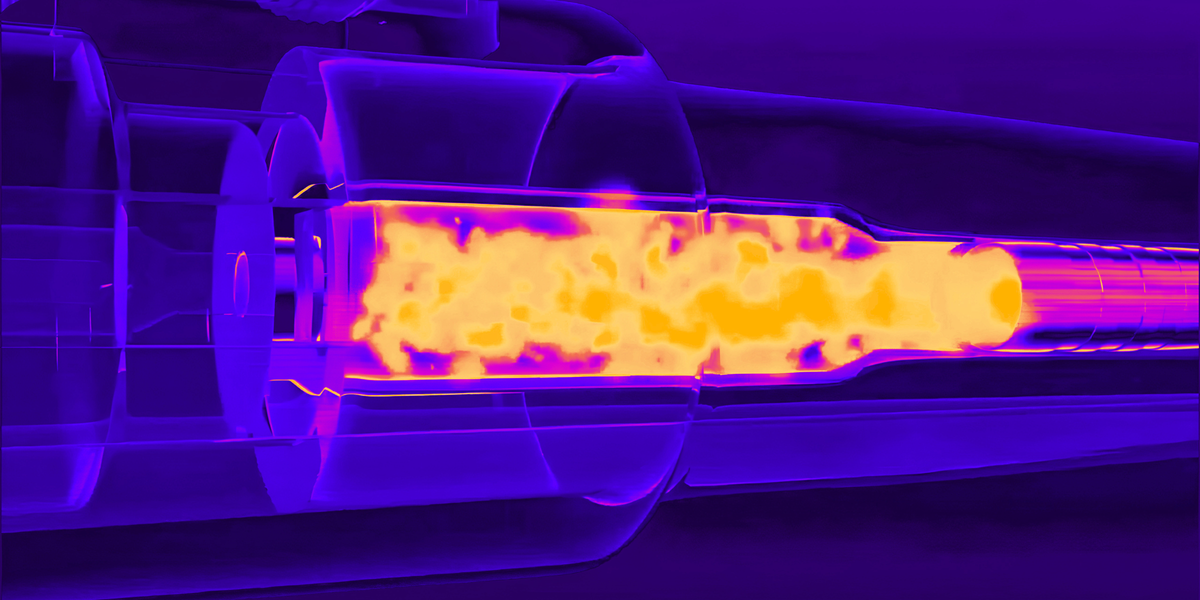
When the swingarm excites the system, the mass moves up, compressing the spring. That spring stores preload energy, just as a gun's firing pin preloads the tension it is about to release. At the point of maximum compression, the mass separates from the lower buffer and becomes free in the air. It is no longer held by any elastic element. For that fraction of a second, it resembles a projectile inside a gun barrel: a mass with velocity, with accumulated kinetic energy, travelling under ballistic conditions.
And when the compressed spring drives it downwards, that mass does not "rebound" in the damped sense of the word. It is released with force.
Ballistics is not a metaphor
Nicola Bragagnolo states it plainly in his own explanations: the system's ballistic coefficient is not negligible. It is a real component of the equation that calculates the device's behavior.
Ballistics is the science that studies the movement of a free mass in the air, propelled by a force, without any guiding contact during that trajectory. This is effectively what happens to the Resonator's tungsten mass in each work cycle. There is no oil to slow it down. There is no valve to regulate its return speed. It travels freely, like a projectile, until impact.
That impact against the polyurethane buffer is equivalent to the moment the projectile hits its target. And the energy of that impact — amplified by the speed achieved during free flight — is what generates the downward force on the tire.
The more the cycle resembles a shot, the more effective the system.
Where the analogy breaks down
Here's the difference that matters.
A gun fires once. It releases all its energy in a single event and stops until the next manual reload. The Gravitational Resonator doesn't fire once. It fires constantly, dozens of times per second, in a cycle that reloads itself with each new excitation of the swingarm.
A gun aims outside the system, at an external target. The Resonator aims inside the system itself, at the tire, as part of a closed circuit that self-regulates with each cycle.
And above all: a gun seeks to cause destructive impact on something external to it. The Resonator seeks exactly the opposite. It uses the logic of a controlled shot to generate stability, not destruction. To keep something glued to the ground, not to separate it from it.
It uses weapon-like mechanics in the service of the physics of safety.
Why this should give you more confidence, not less
That the Gravitational Resonator uses ballistic logic is not a defect to hide. It is the reason why it works where conventional systems fall short.
A hydraulic damper can never generate a force as fast or as precise as that produced by a freely flying mass accelerated by a spring. The speed of a ballistic system gives it a clear advantage over a purely viscous system. That is why the Resonator can act the instant the tyre rebounds, while conventional suspension is still processing the signal.
It is a ballistic mechanism repurposed for safety: instead of projecting force outwards, it directs force downwards, towards the contact patch that matters most — keeping the wheel connected to the asphalt.