
Article: Why a Gravitational Resonator is not a mass damper
Why a Gravitational Resonator is not a mass damper
A conventional mass damper achieves antiphase through passive resonance. The mass oscillates freely between two symmetrical elastic elements, and if the system is well calculated, its oscillation naturally falls into antiphase with the main system's vibration.
It works. But it has a structural limit.
The mass of a mass damper has symmetrical upward and downward components. The energy it dissipates on the upward stroke is equivalent to the energy it dissipates on the downward stroke. The system is linear. And its efficiency depends on the excitation frequency exactly matching the mass damper's resonance frequency. Outside of that range, efficiency drops.
The Gravitational Resonator deliberately breaks that symmetry.
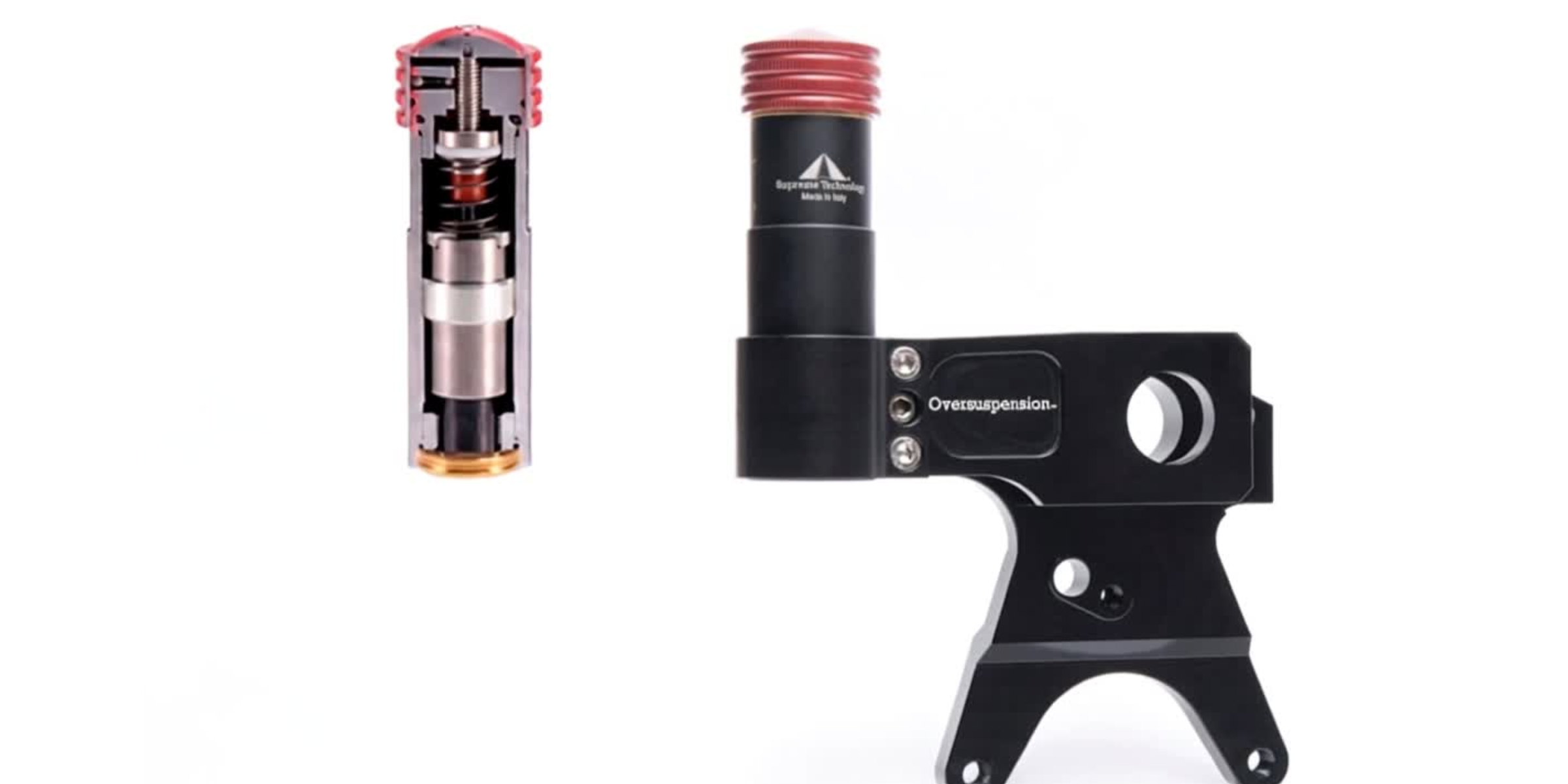
When the swingarm goes up and excites the system, the mass goes up, compressing the upper spring. So far, it's similar to a mass damper. But at the point of maximum compression, something happens that doesn't occur in any conventional mass damper.
The mass separates from the lower buffer.
It remains free in the air for a fraction of time. Without contact with any elastic element below. At that instant, the mass is a projectile: it has velocity, it has mass, it has accumulated kinetic energy. And when the compressed spring drives it downward, that mass travels in ballistic condition before impacting the buffer.
The result is that the downward component is significantly greater than the upward component. The asymmetry is intentional. The energy released in the downward impact on the buffer—amplified by the ballistic component and by the increased stiffness of the buffer during higher-speed impacts—generates a downward force on the tire that is much greater than what a purely elastic and symmetrical system would generate.
It's not a passive antiphase that reduces vibration. It's an active, directed force that pushes the tire towards the ground.
The system's resultant is the swingarm frequency minus the frequency energy of the mass. A resultant that, under ideal calibration conditions, approaches zero at the critical point where the tire tends to lift off.
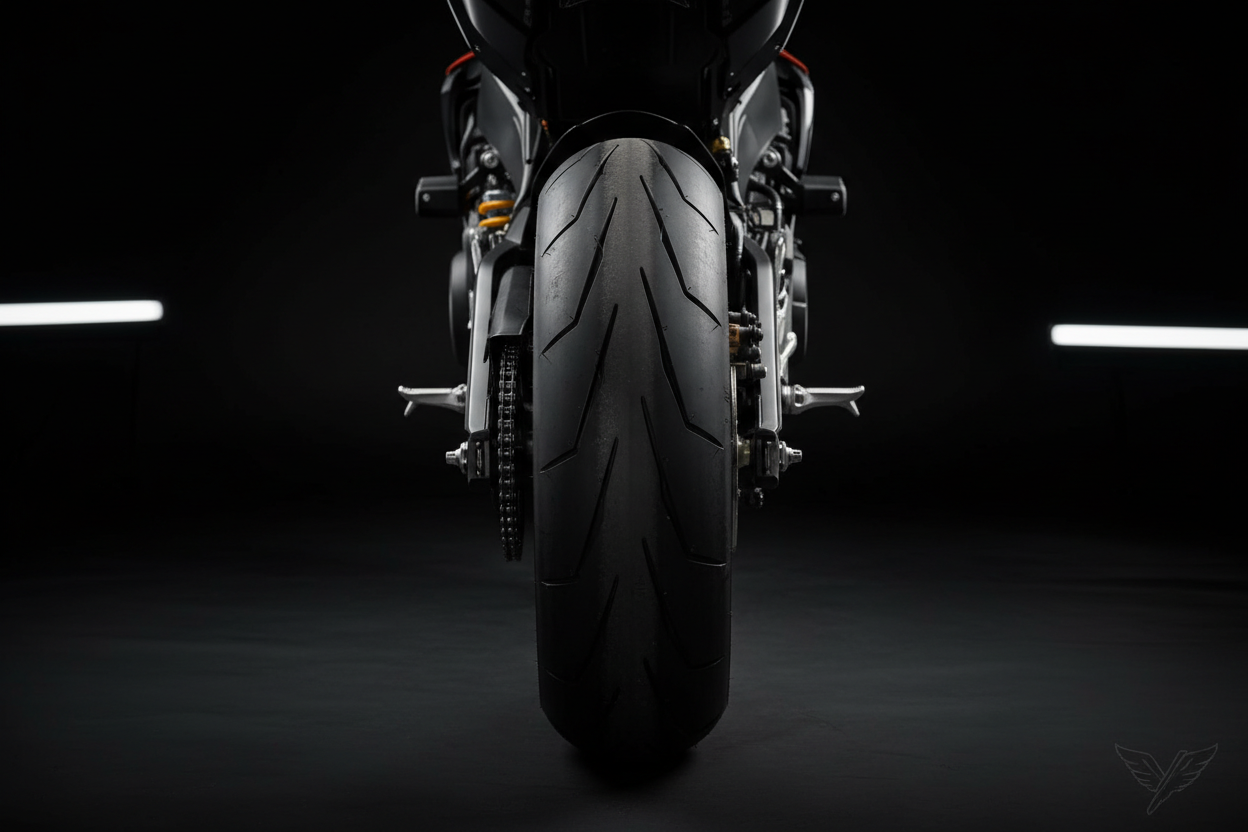
That's the difference. The mass damper manages vibration. The Gravitational Resonator eliminates the problem that causes that vibration: the tire lifting off the asphalt.